The Nelson Algren Committee

From its beginnings at Lotties Pub, to a long stint at the Bop Shop and Czar Bar, to its current venue, the Nelson Algren Committee continues to promote and encourage interest in a writer who "made Chicago his trade."

None of Algren's work was in print when the Committee planned its first event in 1989. Today, in addition to the Nelson Algren Fountain (Milwaukee at Ashland); the Algren apartment historical site; and the Birthday Party, the Committee can point to all of Algren's work having been returned to print.

To find out more about the committee and its work contact:

The Algren Committee ..

Nina Gaspich, Alice Prus, Hugh Iglarsh, Kurt Jacobsen
and Warren Leming

Address: 2418 W. Bloomingdale, #203, Chicago, IL 60647 USA

Please review our newsletter below to which we welcome contributions.


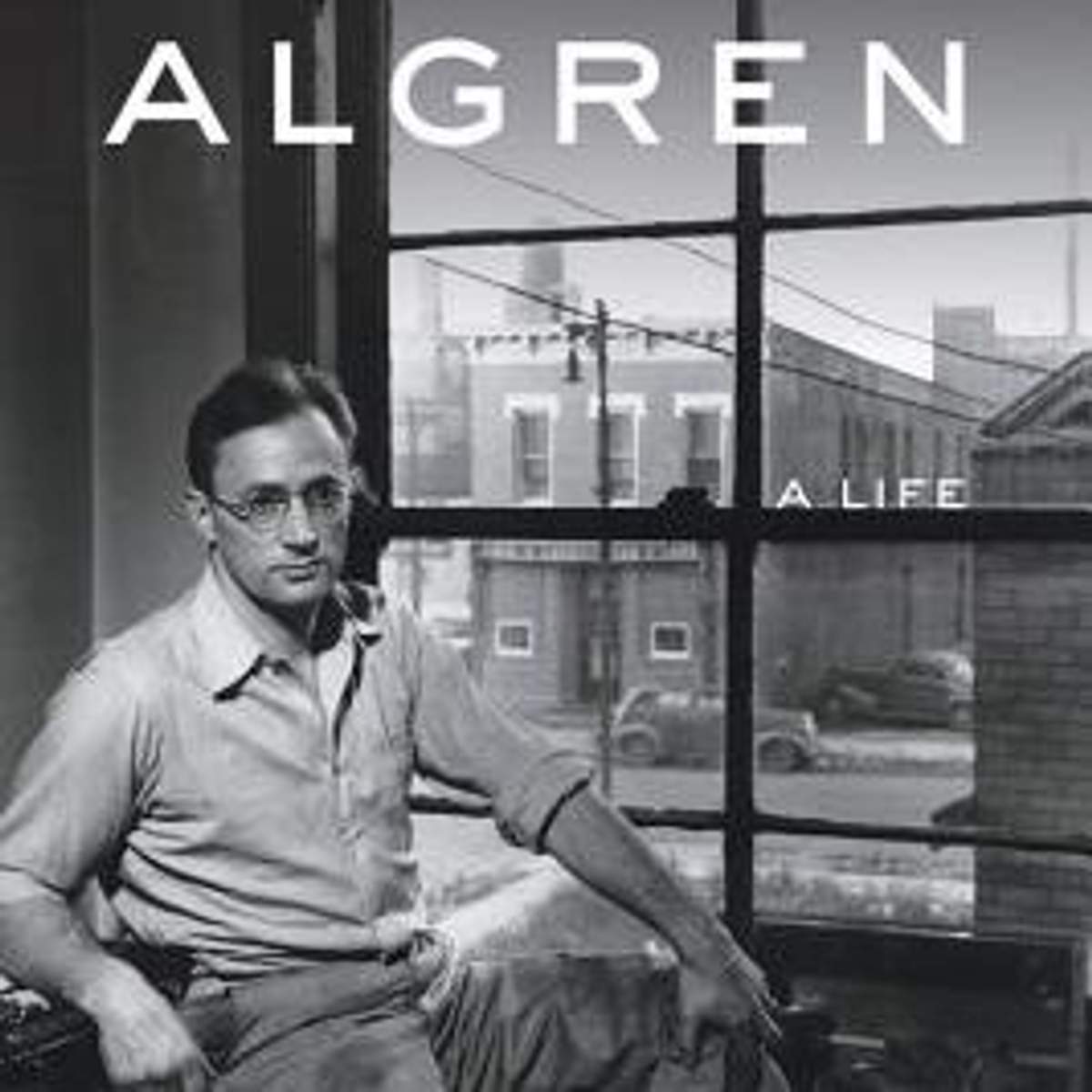
Nelson Algren Photo

Our Founder,
established in 1989.

"By nights when the yellow salamanders of the EL bend all one way and the cold rain runs with the red-lit rain.
By the way the city's million wires are burdened only by lightest snow;
When chairs are stacked and glasses are turned and arc-lamps all are dimmed.
By days when the wind bangs alley gates ajar and the sun goes by on the wind.
By nights when the moon is an only child above the measured thunder of the cars, you may know Chicago's heart at last."
Nelson Algren: Chicago: City on the Make


The Algren Birthday Party... No. 19 ..... MARCH 22, 2008


The 19th annual Nelson Algren Birthday Party closed out around 1 AM on March 22, 2008 to the strains of the Frankie Machine Blues Band, led by John Garvey. Poets Charlie Newman, Joe Rorty and Dan Godston did great work at the podium, as did actor Richard Henzel, whose version of Lord Buckley's hipster rendition of "The Raven" was one of the hits of the evening. Thom Cox, star of Lookingglass Theatre Company's "Nelson Algren: For Keeps and a Single Day," had a rapt audience for his reading of Algren's "The Ryebread Trees of Spring." Playwright John Musial then talked about the writing of the play, set to be remounted this June. Algren himself appeared via DVD to deliver a choice anecdote from the 1960s film "Goldstein."

It was a night filled with stellar performances, not least from Algren Committee Award winners John K. Wilson and Kari Lydersen - read their books and check their Web sites for more about their outstanding journalistic contributions. Algren pal Art Shay delivered a detailed 45-minute analysis of his life with Algren and his famous rear-view shot of Simone de Beauvoir. He wound up selling out of his stock of "Chicago's Nelson Algren," his newly published look at Algren's life and times in stunning black and white. Shay is soon to be feted in Paris, where a show featuring his work will be up and running this spring.

The Near Northwest Arts Council sponsored the event, and its director, Laura Weathered, helped the approximately 100 Algrenites in attendance whet their whistles at the cash bar. Committee member Kurt Jacobsen sorted things out at the door, midst a bitter cold Chicago winter night.

Set for the first time in the cozy downstairs social hall of St. Paul's Community Church on North Avenue, the Birthday Party offered five free-form hours of poetry, theater, storytelling and music. It was a community coming-together and fitting tribute to an artist whose life and work is rooted in these streets.

Hugh Iglarsh, Warren Leming ....


Take a peek at some photos from the 2007 party courtesy of Jon Rosenblatt:

Nelson's Mugshot Lineup


Understanding Nelson Algren
Univ. of South Carolina Press
Brook Horvath

William Faulkner said that every Southern schoolboy waits eternally for George Pickett to raise his sword and begin the mad charge into Union artillery that will end with the decimation of his division and the death of Confederate hopes at Gettysburg, the high-water mark of the Confederacy.

For Nelson Algren, Chicago waits eternally to expiate the sin of its beginnings in the Haymarket show trial and the judicial murder of the Haymarket victims, hanged to stave off the fight for the Labor Union and the eight-hour day. Algren never forgave Chicago's ruthless merchant class that oversaw the exploitation and political-cum-judicial repression that still stigmatize the good residents of the Second City. And so Algren, like the Truth, had a hardscrabble life in the town he "made his trade."

Lumping Algren with Faulkner may seem perverse, but the two shared a fascination with an America that continues to defy explanation. They are both attuned to a culture of violence and deliberate moral confusion that today finds clear expression in FOX non-News and can be summarized by the sentence: "The more you watch the less you know."

Brooke Horvath's Understanding Nelson Algren, published by the University of South Carolina Press as part of its "Understanding Contemporary American Literature" series, introduces a new generation of readers to Algren. Horvath's book charts Algren's beginnings, wandering the country in the midst of the Depression, getting jailed in Texas and then returning to Chicago broke but convinced, against all the odds, that he could get enough of the city onto paper to make a living as a writer.

Inspired by Dickens, Conrad, Celine, Sartre and his friend Richard Wright, Algren set out to describe what he had found in what Brecht called "the great jungles we know as cities." Algren had already been writing for well over a decade when The Man With the Golden Arm , which won the first National Book Award for fiction, made him famous to littérateurs and infamous to many of Chicago's more respectable citizens. The book is one of the first serious attempts to look at drug addiction in a nation the writer found riddled with "spiritual desolation."

It is difficult now to reconjure the world that produced Algren and Wright, James T. Farrell and Studs Terkel. It was a world which villified a broken and exploitative Capitalist system now shifted to a media-driven triumphalist mode. Capitalism was so universally deplored that Depression-era American literature now reads as though from another planet.

What happened, one asks with Mr. Horvath, to all that now-suspect anti-mercantilist Realist prose and the radical energy that produced it? The answers lie in the carefully buried Past, victim, as Algren predicted, of the media's endless rewrite in a country continually riven by racism, inequality, violence and a rapacity that leaves a Quentin Tarantino salivating and Progressives wishing they'd been born elsewhere.

Horvath is good on the FBI, with its ever more hysterical Cold War hyperbole, as it brands Algren a "potentially active enemy agent." In today's atmosphere, he'd be considered a Terrorist. Horvath saves us a superb and prophetic Algren quote: "We must recognize that, in the eyes of the world, the CIA is now reversing what it once meant to be an American." This uttered a quarter-century and counting before George W. Bush stepped to the podium and forever blackened the legacy of a State that, if not failed,has revealed its successes as steeped in the blood of its own citizens.

It is not farfetched to call Algren a prophet, and Horvath suggests as much. Algren's view of the U.S. as "an Imperialist son of a bitch" has now been echoed by everyone from Noam Chomsky to Bill Blum to Ramsey Clarke.

What did happen to Algren who, along with Robeson and Wright and Farrell and the Hollywood Ten and thousands of others, found themselves enemies of the State? Their passports pulled, their phones bugged and their careers virtually ended by a state-sponsored attack on "subversives" that's been re-worked in our own time. Once again, the Fascist slanders of the Corporate media and the "anti-Terrorist" campaigns funded by taxpayer dollars are squandered on horror shows that produce universal hatred of the U.S. Algren held to these views despite the price exactted. Horvath suggets that the price of Algrens truths was career suicide.

The chasm between an indifferent elite and the masses of people at the bottom of the system is now a fixed fact of American life. Algren's generation is to be the last allowed to take this fact seriously, as something shameful to be acted upon. We live now, as Horvath suggests, at a time when Algren remains a problem for the po/mo academics, the hacks at the heart of the media and the middlebrow millionaire breast-beaters of the Dr. Phil and Oprah variety.

What response other than deep despair could Algren summon to what he saw in his own time? Horvath's book remains good evidence that Algren - for all his troubles, tormented love life, blighted career and eventual literary exile - remained true to something that's disappearing quickly in the self-proclaimed home of "freedom and democracy": human compassion. Brooke Horvath has given us a good look at Algren's legacy: the Corporate/State Lie and Algren's great "No" to America.

Warren Leming


Farleigh Dickinson Press has announced the publication (late Dec. 2007) of .... Nelson Algren: A Collection of Critical Essays
(ISBN 0-8386-4108-3),edited by Robert Ward. (Dr. Ward lectures in American Literature at St. Martins College, Lancaster, England.)


Ward, while still an undergraduate at Leeds University, organized the first Nelson Algren Symposium which invited Algren scholars, and the Algren Committee's Warren Leming to England for a three day event. The book includes the essays on Algren delivered at Leeds.

For more information write: Farleigh Dickinson Univ. Press, M-GH2-01, Madison, New Jersey, 07940 or email them at fdupress@fdu.edu

Algren's Eye: Photography and the City by Warren Leming

Most recently, the BBC (Scotland) shot "A Walk on the Wild Side," in Chicago, with the co-operation of the Committee. The video documents Algren's now famous love affair with the French writer and feminist icon Simone De Beauvoir. Copies are available thru the Committee.

The Committee is making available, for the first time, a CD of Algren reading from his work. The CD will contain a long interview with Algren by Studs Terkel. There are also excerpts of Algren reading from his work. If you are interested you can write or call the Committee about obtaining a copy. Produced by Cold Chicago, the CD was originally recorded at FM station WFMT.

In addition, a map of Algren sites, fictional and real, has been created by artist Robert Hartzell and is now available, have a look!

A Video . . . Nelson Algren's Last Night! . . . by Warren Leming & Carmine Cervi

Click the link to download an mpeg of the Frankie Machine Blues bands version of: Algren Street our homage to the work of Nelson Algren. The lyrics to the tune are also available.


The Nelson Algren Committee awards go to artists and activists who have made outstanding contributions to Chicago's Progressive community.

Past Nelson Algren Award recipients

  2003

  2004

 2005

 2006

 2007

 2008

 Don Rose

 Laura Weathered

 Jeff Huebner

 Glenda Daniel

 Diana Berek

 John K. Wilson

 Carlos Cortez

 Roberto Lopez

 Vesna Rebernak

 Carl Davidson

 Lew Rosenbaum

 Kari Lydersen

   Jon Jost

 David Williams

 Penelope & Franklin Rosemont

 Marguerite Horberg

 Bob Rudner
 

 Kate Hogan

 Peter Kuttner
       

 Jim Redd

 Judy Hoffman


Algren Quotes:

"Literature is made upon any occasion that a challenge is put to the legal apparatus by conscience in touch with humanity."

"The hard necessity of bringing the judge on the bench down into the dock has been the peculiar responsibility of the writer
in all ages of man."

"I went out there [Hollywood] for a thousand a week, and I worked Monday, and I got fired Wednesday.
The guy that hired me was out of town Tuesday."

"The avocation of assessing the failures of better men can be turned into a comfortable livelihood,
providing you back it up with a Ph.D."

"Books by Nelson Algren"

Somebody in Boots, Never Come Morning, The Neon Wilderness, Man with the Golden Arm, Walk on the Wild Side
Chicago: City on the Make, Who Lost an American?, Notes from a Sea Voyage, The Devil's Stocking


Literature resources - directory of literature related websites and discussion groups.

Copyright: Cold Chicago Company, 2001-2008